Local Permit
The route that goes to Island Peak passes through several localities. Permission, sometimes known as local permits, is necessary while passing through certain villages and localities. The cost of a local permit, roughly USD 20, is pretty reasonable and fair, enabling you to pass through several communities without complications.
Island Peak Climbing Cost
The 19-day Island Peak trek with Peregrine Treks and Tours costs approximately $2500. Several factors, including those listed below; also affect how much it costs during Island Peak Climbing
Route
In essence, there are numerous routes you can use while climbing Island Peak. Consequently, the lengthier route will cost more than usual. You will need to spend more money as the number of days increases. Similar to adding new routes that connect to the EBC and other summits, the price will increase. Taking the sole consistent method directly to Island Peak will cost you between USD 2500 and 3000.
Accommodation
Following your arrival in Kathmandu, you must decide which hotel to stay at. Depending on the standards and quality of the services, the cost of lodging in Kathmandu often ranges from $10 to $200. Likewise, teahouses will offer you first-rate services while you’re on the trek to Island Peak. Teahouses will run you about $2 to $5 a night, which is a pretty reasonable price. A nicer teahouse may be found by paying more money if you want other amenities like a hot shower and internet access. The fact is that teahouses will be one of the places in the Everest region offering typical Nepali services.
Meals
During Island Peak Climbing, meals are a vital component. In Kathmandu, you may expect to pay anywhere from $2 to $5 for each meal and drink, depending on your preferences. Your ability to stick to a specific budget depends on you. Similarly, food prices in the Everest area will be much higher than in Kathmandu. The price of meals varies according to altitude. You may enjoy a variety of Nepalese dishes, such as Momo, Chowmien, Sukuti, Dal Bhat Tarkari, and others, for $5 to $7.
Guides and Porters
During the ascent of Island Peak, porters and guides play a crucial role. Depending on the Everest Region’s sceneries and weather, guides might cost anywhere from $25 to $35 per day, while porters can cost anywhere from $15 to $20.
Other Expenses
You could consider purchasing handicrafts and artwork from historic Everest region towns and monasteries for $5 to $10. Similarly, extra meals, snacks, and beverages will run you about $5 daily. Similarly, the cost of bars, pubs, and water bottles will be at your own expense. It will be sufficient for you to set aside $15 to $30 each day for additional costs.

Island Peak Climbers
Island Peak Climbing Time
The major challenge while climbing a peak in Nepal is the unpredictable, changeable weather patterns. Similar to this, it won’t be challenging to determine the ideal season for Island Peak Climbing if you explore and have some understanding of it.
Spring Season
March, April, and May fall under the spring months. For Island Peak Climbing, this year will be the finest one ever. Similar to how it would amaze you to see the Himalayan peaks Makalu and Everest in such perfect view. You will be ascending Island Peak with breathtakingly clear views of the local flora and animals with evergreen surroundings. It will be around 12 to 15 degrees Celsius in the daytime, while it falls under 3 to -5 degrees at night.
Autumn Season
Autumn Season is the period from September through December. You will have the best trekking experience possible during Island Peak Climbing since the day will be warm and there is no chance of rain. Following the spring season, autumn is one of the greatest seasons to climb Island Peak. Your mind will be overwhelmed by this season’s magnificent vistas of Ama Dablam, Mera Peak, and Everest. 10 to 12 degrees Celsius will be the temperature during the day, while -15 degrees Celsius will be the temperature at night.
Summer Season (Monsoon)
The Everest region is quite dangerous and adventurous during the summer (June to August). By directly striking the eastern Himalayas, the monsoon wind from the Bay of Bengal causes torrential rainfall. Similarly, you will face the hurdles like steep inclines and rough, muddy terrain. However, the adventure and thrill-seekers will find this a magnificent excursion. After precipitation, you will see the Himalayas in crystal evident relief as the enigmatic clouds envelop them. Around 20 degrees Celsius will be the daily temperature, while between -3 and 5 degrees Celsius are experienced at night.
Winter Season
During the winter, the ice, snowy environment offers you a true sense of the season. The peak of the winter season occurs in December and January. Everything is affordable during this season for Island Peak Climbing, from accommodations to permits, which is an excellent benefit of trekking in the fall and winter. Similarly, the trial won’t be crowded, providing you the opportunity to use the experience fully. In the afternoon, the temperature will be around -10 and -15 degrees, and at night, it will drop below -22 degrees Celsius. Heavy, thick clothing and staying hydrated are essential during this particularly chilly season.

Island Peak Camp
Island Peak Summit View
The island peak summit, at the height of 6189m, offers you a stunning perspective of the nearby Himalayas and glaciers, which is unexpected. The deep Chukung valley grabs your spirit with its excellent Himalayan natural features. A spectacular view of Lhotse, Ama Dablam, Cho Oyu, Everest, Makalu, and Kanchenjunga is available from the summit of the island mountain, which is full of wonders. Many glaciers above the Dudh Koshi River range from east to west.
From the summit of Island Peak, you can see these magnificent sights. Before climbing to Island Peak Summit, you will also ascend Kala Pathar (5644m), which offers stunning views of the Himalayas and other natural features.
Island Peak Glacial Lake
Around Island Peak, there are many glacier lakes. You can see these glacier lakes when climbing Island Peak, located between the Lhotse’s Edge and the low point of EBC. Imja Glacial Lake is one of the well-known glacial lakes in the Khumbu region, which lies to the southeast of Everest. It is also one of the most intriguing glaciers in the area.
Similar to how it supplies most of its low-altitude Rivers and streams with water, this glacier does the same. This glacier lake flows over the Terai region’s rivers, including the Himalayas streams Dingbouche, Dudh Koshi, and several more, before reaching the Indian Ocean. The Lhotse Glacial Lake is nearby the island peak, slightly to the west.
The fundamental problem is that these glaciers are melting alarmingly slowly. According to meteorological vulnerability, Imja Glacial Lake is divided into four keys, which are as follows:
- Avalanche Zone – The combination of ice rocks and snow production in glaciers due to shallow temperatures
- Transition Zone – the region, which almost encompasses roughly 20 percent of the glacial lake, is where colossal ice begins to form.
- Accumulation Zone – Glacial formation begins at elevations more than 5800 meters.
- Debris Zone – Another name for the region around a glacial lake where a heavy covering of ice and glacier is always present

Tengboche Monastery
Island Peak Climbing Summit Post
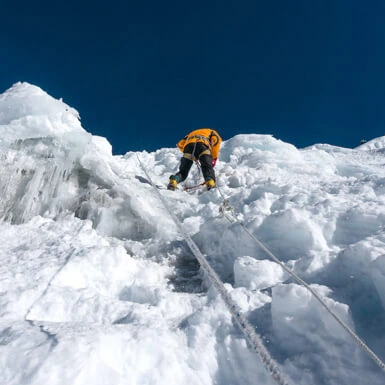
When you climb Island Peak in the Khumbu Region, you will have an incredible and breathtaking experience. The Island Peak, often called “Imja Tse,” is 6189 meters high. Eric Shipton’s crew named this mountain Island Peak in 1951 AD due to its breathtaking panorama that alternates between icy atmospheres. The Eastern Himalayas, seen from east to west, is comparable to this summit. Just to the west of the Lhotse Shar.
Similarly, after climbing Island Peak, you will be capturing stunning photos capturing your incredible moments. Overlooking Island peak’s summit, you will also spend the night in a tent. The Lhotse is where the island peak ends after extending from south to north. During Island Peak Climbing, the ima the glacier lake is one of the incredible spots to witness. The entire eastern Himalayan region, which runs from Kanchenjunga to Everest and includes Ama Dablam and Makalu, is similarly breathtaking.
The Imja Tse Glacier further enhances the summit’s beauty. You will set up a tent at the peak, bring extra food, and spend the downtime admiring the Himalayas’ natural beauty. Similar to the north, the summit provides views of Kala Pathar and Mera Peak to the south. When you catch sight of the glaciers, your spirit is satisfied, and your eyes become tranquil. You will spend your time at the camp enjoying the fullest extent of your Island Peak Climbing Summit Post.

Local Market in Everest Region
Island Peak Climbing Route Map
The magnificent Kathmandu City is the starting point for the fantastic Island Peak Climbing excursion. From Kathmandu (1400m), it will take around 30 minutes to fly to Lukla (2800m). You will trek 3–4 hours north from Lukla to reach Phakding (2500m). Similarly, you will arrive at Namche Bazaar (3440m) after a 2- to 3-hour trek.
Additionally, there are a lot of teahouses in and around this location that will help you to the fullest. Likewise, Tengboche (3867m) can be approached in 4 hours by following a straight uphill trail from Namche Bazaar. Also, you will reach Dingboche (4350m) by proceeding directly with the same trial. These two settlements are a reflection of Sherpa’s culture and heritage.
Additionally, you’ll be seeing some incredible Buddhist monasteries nearby. Similarly, you will go uphill in a straight line for five hours until reaching Chukung Valley (4730m). Similarly, you may get to the High Camp from the Chukung Valley by ascending directly to the north. About 5 to 6 hours are needed to get from High Camp (5700m) to the summit of Island Peak (6189m). Like the outbound trek, you will return utilizing the same path, passing via Dudh Koshi, Tengboche, Dingboche, Namche Bazaar, and Lukla. You’ll identically fly to Kathmandu from Lukla.
No responses yet